Twelve seats.
One table.
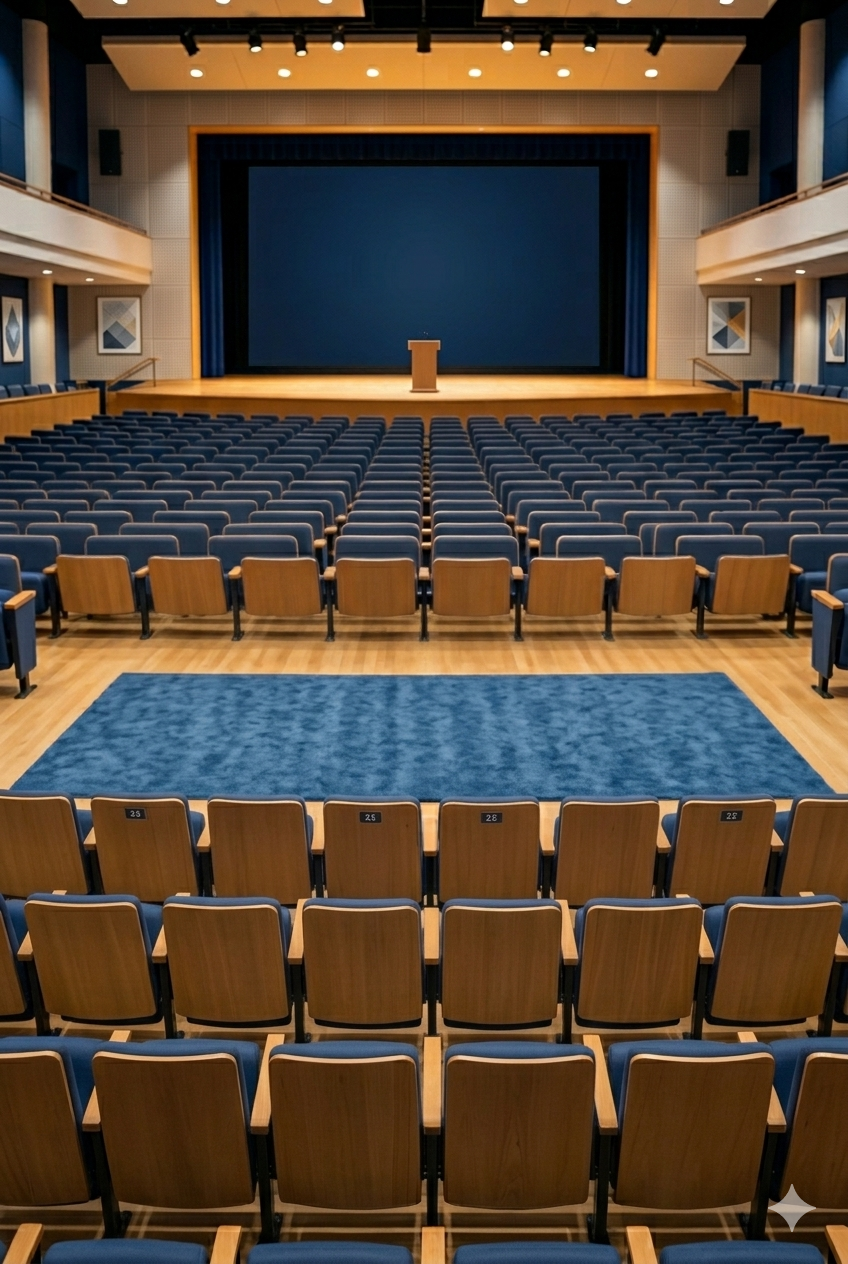
No lecture hall at College seats more than sixty, and most classes are closer to twelve. The curriculum is built around discussion, not delivery.
Breadth first,
depth by choice.
The first year has no declared major. Students take one course from four different divisions — sciences, humanities, arts, and social studies — before choosing where to go deeper.
Every department requires a capstone: a thesis, a design portfolio, a body of original research, or a public performance, defended in front of faculty and peers.
Six departments,
in full.
Double majors are common — roughly a third of each graduating class completes two.
Architecture & Environmental Design
Design studios paired with structural theory, building science, and a year in the field.

Natural Sciences
Bench research from first year onward, across biology, chemistry, and environmental science.

Literature & Humanities
Close reading, translation, and archival work anchored in a seminar-only format.

Visual & Studio Arts
Painting, print, and sculpture studios that stay open to majors and non-majors alike.



Four years,
mapped.
The sequence below is typical, not fixed — advisors adjust it for students arriving with credit or changing direction.
One
Foundations
One course from each of four divisions, plus a small-group writing seminar. No major is declared.
Two
Declaration
Students declare a major and begin department requirements, typically alongside one elective outside the field.
Three
Depth & research
Advanced seminars, lab placements, or design studios; many students study abroad for a term.
Four
Capstone
A year-long independent thesis, portfolio, or research project, defended before faculty and peers each spring.
I don't grade participation on how often a hand goes up. I grade it on whether the room thought harder because you were in it.— Professor of Literature, on seminar teaching