Built to be carried, not just carried around.
We started with one workshop, one pattern, and a rule we still keep: nothing leaves the bench until someone has run a thumb along every seam.
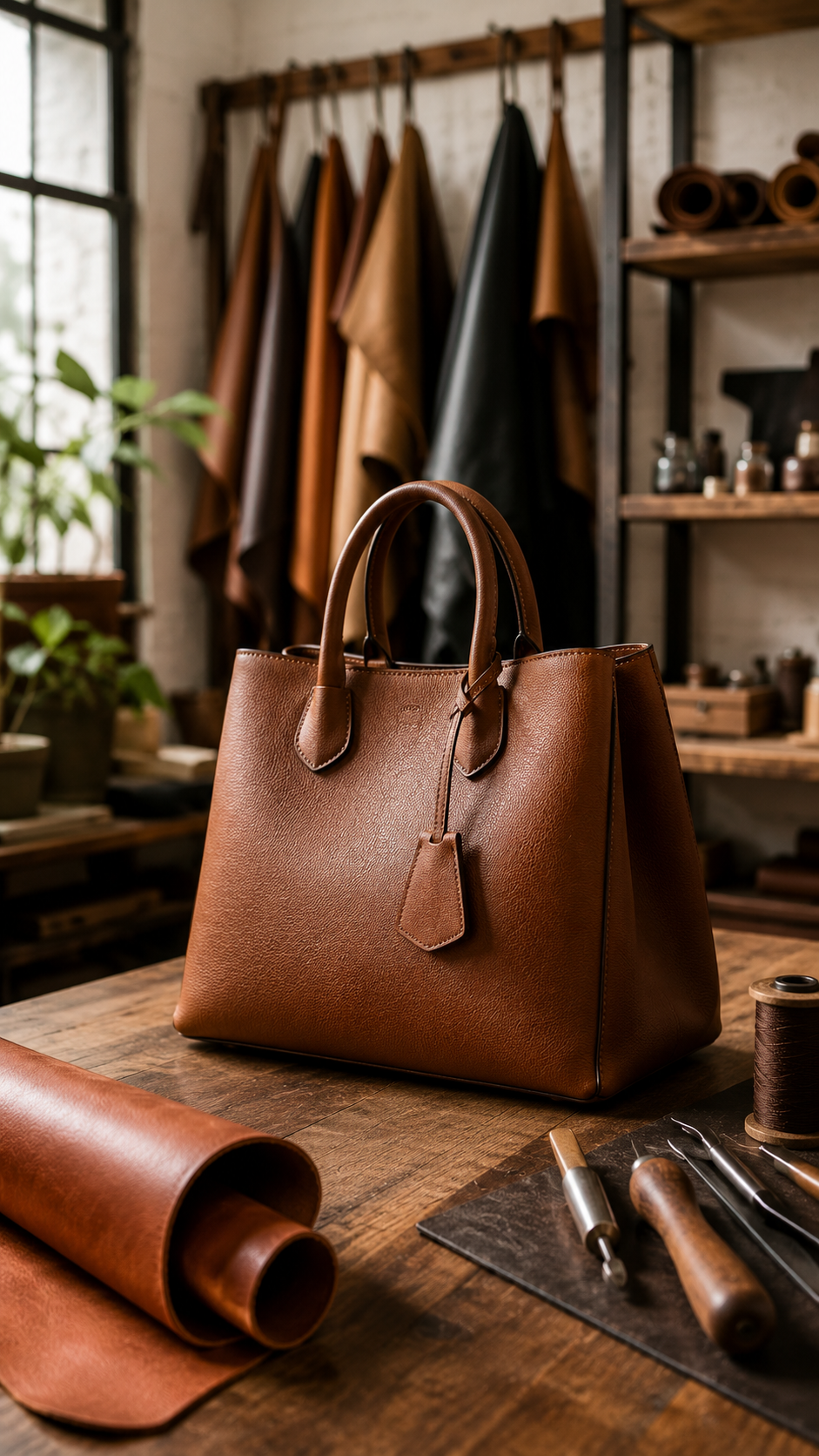
We started with one workshop, one pattern, and a rule we still keep: nothing leaves the bench until someone has run a thumb along every seam.
Handbags started the way most useful things do — out of not being able to find what we wanted to buy. Every tote on the market was either too precious to actually use or too plain to enjoy using. So a small group of us rented a room above a shoe repair shop, bought a single industrial stitcher, and started cutting our own patterns.
Six years later the room is bigger and the stitchers have multiplied, but the rule from that first week hasn't changed: every bag gets used by someone on the team for a month before it goes into production. If a strap digs in, we lower it. If a pocket is in the wrong place, we move it. The bag has to earn its place in our own bags before it earns a place in yours.
A bag should get better with the miles, not worse.
That belief shapes almost every decision we make. We use full-grain leather because it develops a patina instead of just wearing out. We saddle-stitch by hand because a single broken thread doesn't unravel the whole seam. We leave the hardware exposed — brass screws, visible rivets — because we'd rather you see how the bag is built than hide it behind a lining.
We're still a small team. Most days you'll find someone in the workshop testing a strap length against their own shoulder, or arguing gently about whether a pocket is one centimetre too shallow. It's a slower way to make bags. We think it's the only way that's worth doing.
From hide to finished bag, in the order it actually happens — four stages, four sets of hands.
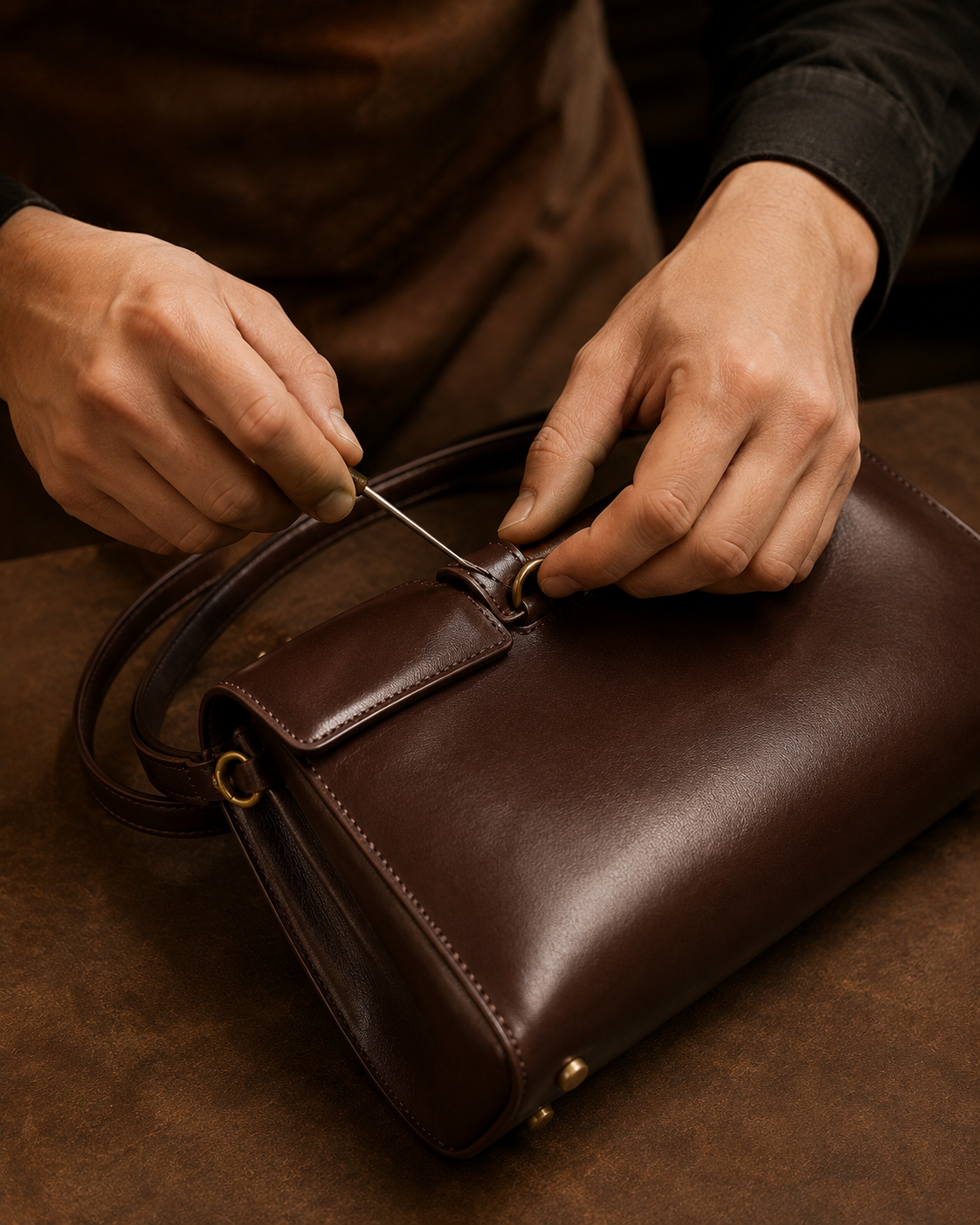
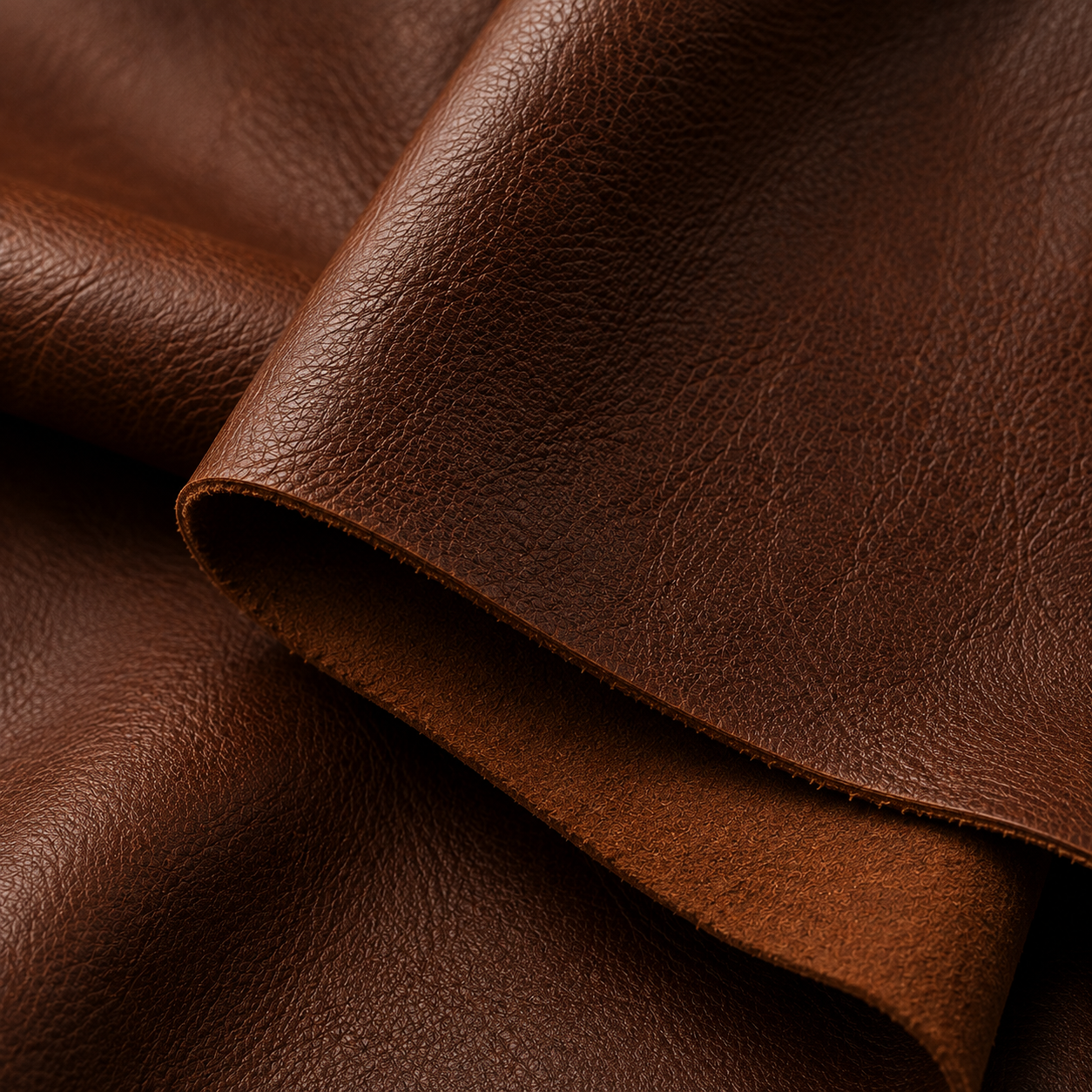
Each hide is checked by hand for grain, thickness, and natural marks before a single cut is made.
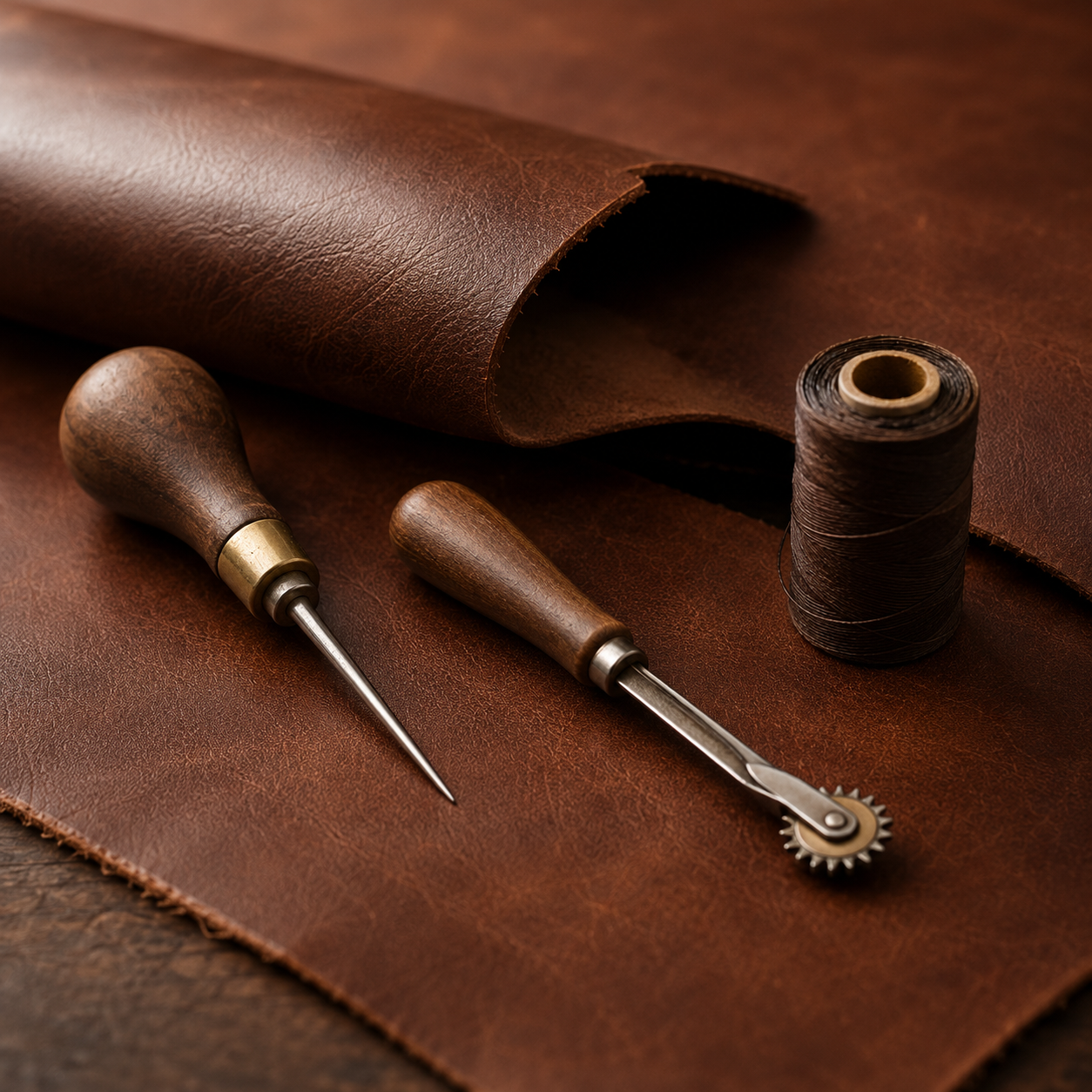
Pattern pieces are laid out to work around marks instead of hiding them — no two panels are quite the same.
Panels are saddle-stitched with waxed linen thread — slower than a machine, but far harder to unravel.
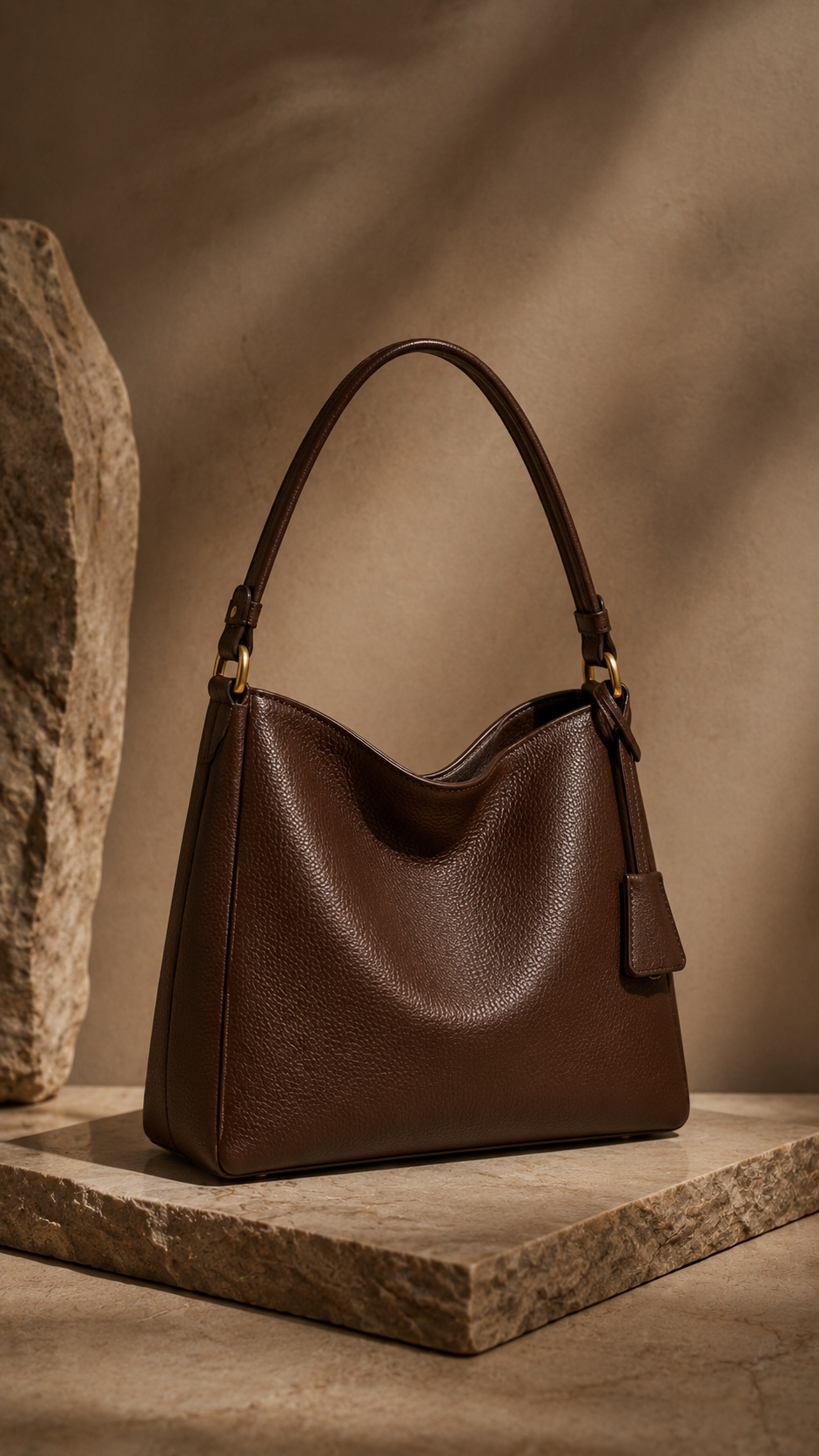
Edges are burnished, hardware is set, and every bag is checked seam by seam before it's approved to ship.
Materials & sourcing
We buy full-grain hides from two small tanneries — one that specialises in vegetable-tanned leather, one that works almost entirely in offcuts from the furniture industry. Neither sells to the big fashion houses, which is exactly why we like them: smaller runs, closer relationships, and a hide we can trace back to the farm it came from.
Hardware is solid brass, sourced from a foundry that's supplied saddlers for three generations. It won't peel or flake, because there's no plating to peel — the gold tone is the metal itself.